They told him the job would last eight minutes.
Not the robbery. His part.
Eight minutes from the time the floor supervisor keyed open the west cage to the time he walked away from it looking like a guy who’d taken a wrong turn between the slots and the bathrooms. Eight minutes was nothing. A coffee break. Less than a smoke. He kept telling himself that, the way he’d been telling his girlfriend everything was fine since the night she sat on the edge of the bed, a positive test in her hand.
He wasn’t given names. Nobody asked for his. They met him in a bar off Tropicana, a low place with video poker at the counter and carpet that smelled like old beer no matter how often it got cleaned. The TV over the bar was muted, a game on that nobody was watching. One of them slid a napkin toward him with a diagram drawn in blue pen. Boxes. Arrows. A circled X.
“This is you,” the guy said, tapping the X with his fingernail. “You don’t improvise. You don’t get curious. Got it?”
The other guy, older, wedding ring worn thin, smiled like he was explaining something obvious. “You walk when you’re told to walk. You stop when you’re told to stop. That’s it.”
They paid him a thousand up front, cash, rolled tight. He didn’t count it. He thought about his girlfriend instead. About the way she’d said, “we’ll manage.” He thought about being a father, about his father.
He nodded and said okay.
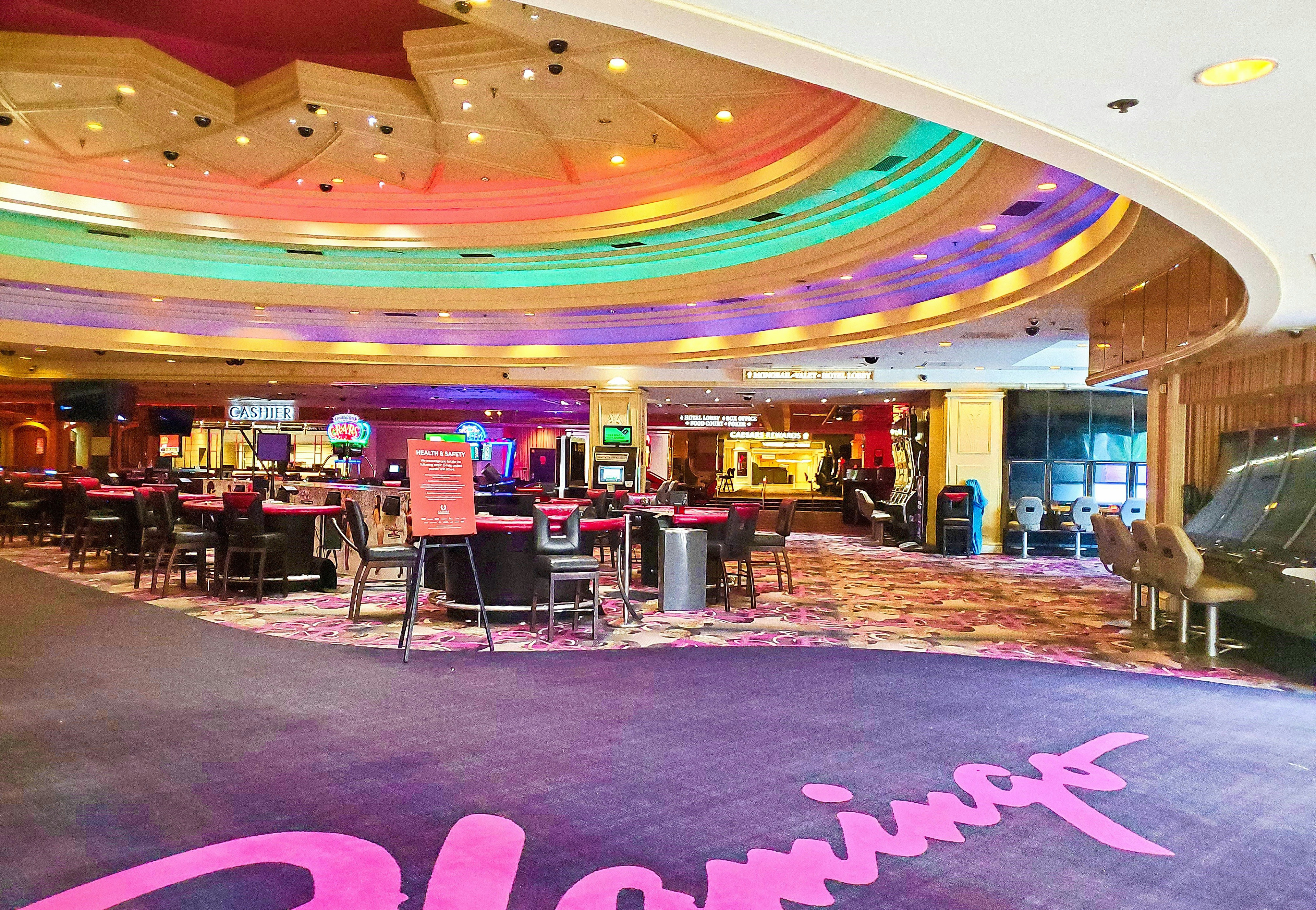
The walkthrough happened two nights later. Just him and the first guy. No masks. No tension. They walked the casino floor like tourists killing time, slow and obvious. The guy talked without looking at him, eyes drifting over the machines, the tables, the crowd.
“That’s the west cage,” he said. “Busy after ten. You don’t want busy. You want the moment before.”
He showed him the staff corridor past the bathrooms, the door with the squeaky hinge, the way the sound dropped once you were through it. He showed him the arrows painted on the floor out back, faded from years of shoes and carts. At the elevator, he stopped.
“Left,” he said. “Always left.”
He nodded. He said it out loud, too. “Left.”
“If you see anything you don’t recognize,” the guy said, “you stop. You blend. You wait. You do not invent an exit.”
That line stuck.
On the night of the job, the casino felt the way it always did and somehow different, like the air had been tuned a half-step higher. He arrived early, wearing exactly what they’d told him to wear: neutral jacket, clean shoes, nothing with a logo. The pouch lay flat and empty when he tucked it under his jacket. It would be full later. He didn’t think about what would be inside. Chips. Cash. Some mix.
He took a seat at a slot machine near the west cage and fed it a twenty. He played without watching, pressing the button when the lights told him to. Around him, people laughed, cursed, leaned close. A woman argued with the screen. Somewhere, an irate loser got hushed. The smell of cigarettes clung to everything, sweet and stale.
He checked his phone. No messages. He pictured his girlfriend at home, folding laundry slow, one hand resting on her stomach without realizing she was doing it. He pictured calling his father after it was over, telling him he had things handled. He hadn’t talked to his father in weeks. Every call lately felt like a test he wasn’t ready to pass.
The floor supervisor stepped into the cage and keyed the door.
That was the moment. The moment before busy.
His phone buzzed once.
He stood up, left the ticket in the tray, and started walking.
The alarm didn’t scream. It pulsed.
A low tone, almost polite, threaded through the casino floor and into the bones. It didn’t stop the dice or the cards or the reels. It just laid itself over them. A reminder. Something had shifted.
He moved toward the restrooms, head angled like he was looking for someone. He kept moving, one step every few seconds, eyes down, hands loose. He counted the machines as he passed them, the way he always did when he was nervous. He’d done it as a kid in grocery stores, in school hallways. Something steady to hang on to.
Seventeen.
Eighteen.
Nineteen.
Eighteen.
Nineteen.
A man at the end of the row hit something. Lights went wild. Coins spilled into the tray. The man laughed and slapped the machine like it was a dog that had done a trick. His wife leaned in with her phone. They were both smiling. The alarm kept pulsing.
He passed the bathrooms and into the narrower corridor beyond. The carpet changed. Darker. The sound thinned. He could hear his own shoes now, the soft scuff with each step. His phone buzzed again, twice this time. That wasn’t in the plan. He ignored it.
A security guard stood near the entrance to the high-limit room, talking into his radio. The guard didn’t look at him. He didn’t look at the guard. He kept going.
The door at the end of the corridor was marked STAFF ONLY. He pushed through without slowing. The hinge squeaked. Just like they’d said it would.
The air on the other side was cooler, flatter. Fluorescent lights hummed overhead. The walls were institutional beige, scuffed and patched. Yellow arrows were stenciled on the floor, pointing toward different wings. He followed the one he’d been told to follow. He counted the turns.
Left.
Straight.
Right.
Straight.
Right.
Voices echoed somewhere ahead. Not shouting. Not yet. He slowed. Sweat started under his arms, along his spine. He told himself it was just nerves. He’d done harder things for less money. Roofing in August. Drywall up three flights of stairs. This was just walking.
The corridor forked.
Left: a short flight of stairs, arrow faded but still visible.
Right: a wider hall with a loading sign overhead.
Right: a wider hall with a loading sign overhead.
Left. Always left.
Someone came running out of the loading hall, moving fast, head down. A woman in a casino vest, hair loose, eyes wide. She didn’t see him until the last second. She swerved and brushed his shoulder.
“Sorry,” she said, already gone.
He hesitated.
Less than a second. Long enough to hear heavier footsteps behind him. Long enough for a voice to cut through the hum.
“Hey.”
He turned right.
The loading hall was longer than he expected. High ceiling. Dock doors along one wall, all closed. A forklift sat parked near the far end, keys dangling. The floor was bare concrete, stained dark in places. His shoes sounded too loud.
“Stop,” someone said.
He didn’t run. He walked faster. His heart banged against his ribs. He could hear his breathing, sharp and quick. He made it halfway down the hall before the sound came.
It wasn’t a bang. It was a crack, sharp and dry, like someone snapping a thick piece of wood.
Something punched him low on the left side, just above the hip. Not pain at first. Pressure. A shove that knocked him off balance.
He went down on one knee, hand slapping concrete. The pouch shifted. He grabbed for it, then for his side. His palm came away wet.
He got back to his feet. He didn’t look behind him. He didn’t need to. Shouting now. Radios squawking. He leaned into his stride, one hand pressed hard against his side. The pressure helped. He’d learned that somewhere.
The dock door at the end of the hall had a red EXIT sign over it. He shoved through and stumbled into night.
The air hit him like water. Cool and sharp. Oil and garbage and damp concrete. The casino loomed behind him, all glass and light. He kept moving, angling away.
His side burned now, heat spreading deeper with every step. He pressed harder, fingers slick. Sirens wailed somewhere distant, getting closer. He cut between two delivery trucks and came out on a narrow service road. A man stood by an open trunk, smoking, phone wedged to his ear. The man glanced at him, then looked away.
He reached the end of the service road and turned onto the main street. Traffic flowed past, steady and indifferent. Neon buzzed overhead. A bus roared by, the wind tugging at his jacket.
He slowed himself. Forced it. His vision fuzzy, a faint ringing in his ears. He leaned against a streetlight and slid down to the curb. The concrete was cold through his jeans. He closed his eyes for a moment.
Just a moment.
He thought of his girlfriend then. Not in a rush. The way she slept on her side now, one hand always finding her stomach. The smell of her hair. The sound she made when she laughed at something she hadn’t meant to laugh at.
He opened his eyes. Dark was spreading across his jacket. He pressed again. It hurt now. Sharp, insistent. He pulled his phone from his pocket. The screen was cracked. He requested a ride with shaking hands, bloody fingers slipping.
Three minutes.
When the car arrived, he pushed himself up and slid into the back seat. The driver glanced at him in the mirror.
“You good?” the driver asked.
“Yeah,” he said. “Just a long night.”
The driver shrugged and pulled away.
Streetlights passed in a steady rhythm. He rested his head against the window. The glass was cool. He felt warm everywhere else. Too warm. The pain softened.
“You want the heat on?” the driver asked.
“Leave it,” he said.
The car turned into his neighborhood. Houses dark, a few windows lit. He pictured the porch light. The loose step he always meant to fix. He closed his eyes.
“Hey,” the driver said. “We’re here.”
He didn’t answer.
Behind the casino, in the service corridor under fluorescent lights, his body lay on the concrete floor. Blood pooled beneath him, dark and still. An EMT knelt at his side, gloves red to the wrist, fingers pressed hard against the wound.
“No pulse,” the EMT said into the radio. “Calling it.”
The radio crackled back underthe alarm pulsed on.